Kitchen Helper Job Opportunities and Roles: Pay, Schedules, and Where to Apply in the UK
Most kitchen helper listings in the UK advertise £10-11 per hour with zero guaranteed shifts. A separate tier of roles — full-time at 6-8 hours or part-time at 2-4 — pairs £42.90/hour base pay with health insurance and paid leave rarely seen at entry level.
Kitchen Helper Job Opportunities and Roles
£42.90 per hour is roughly 3.9 times the £11.05 UK National Living Wage (April 2024 rate) that most pub and restaurant kitchens still pay entry staff. Kitchen helper job opportunities involving food preparation support, cleaning duties, kitchen organization, and operational assistance sit at the bottom of the brigade — yet the advertised compensation package on premium contracts flips the usual hospitality math. Before you dismiss that figure as marketing noise, run the weekly numbers: full-time at 7 hours per day across five days equals 35 paid hours, or £1,501.50 gross before tax. Part-time at 3 hours daily for four days yields £514.80 per week. That is not gig-economy pocket money — it is rent-covering income from a role that requires no culinary degree.
Kitchen Helper Job Opportunities and Roles in UK Food Service
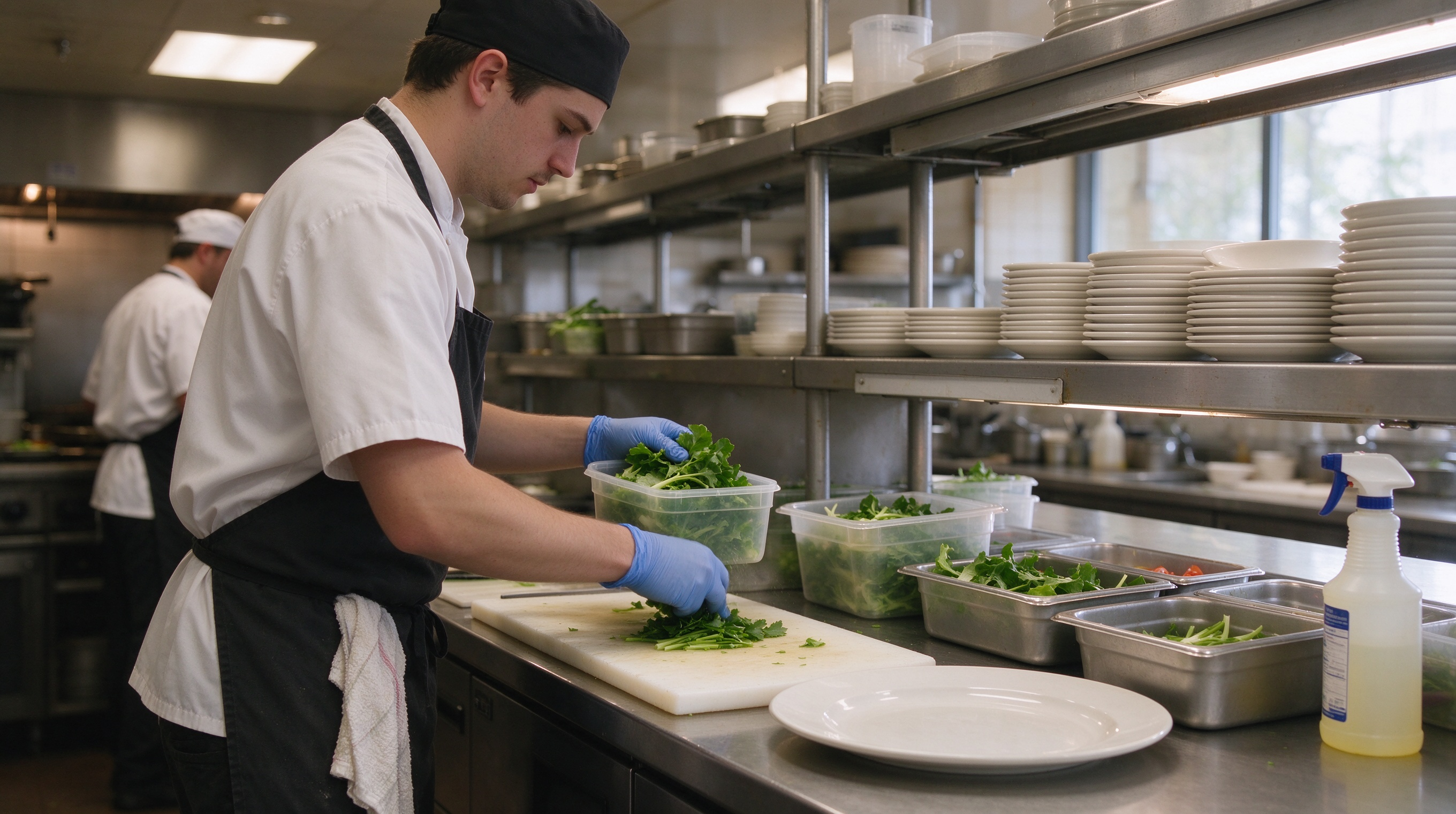
Kitchen helper jobs form the operational backbone of every commercial kitchen, from contract catering sites to high-street dining chains. Positions cover ingredient preparation, sanitation practices, workplace procedures, and support within food service environments where head chefs and sous chefs depend on reliable backup. The role is entry-level by design, but the workload is physical: standing shifts, heat exposure near pass stations, and repetitive prep cycles that demand stamina more than formal qualifications.
Core Duties in Food Preparation Support
A kitchen helper peels, washes, weighs, and portions ingredients before line cooks assemble dishes. You might de-bone chicken trays, refill mise en place containers, or label date-coded stock under chef supervision. Speed matters — a slow prep station backs up an entire service — but accuracy matters more when allergen separation and cross-contamination rules apply.
Kitchen Cleaning and Sanitation Standards
Kitchen cleaning is not a side task; it is half the job. Deep-cleaning fryers, sanitising worktops to food-safe standards, mopping slip-prone floors, and clearing grease traps keep an operation licensed. Health inspectors score kitchens on visible cleanliness and documented cleaning schedules. Helpers who treat sanitation as routine rather than punishment become indispensable within weeks.
Organisation, Stock Rotation, and Operational Assistance
Beyond prep and kitchen cleaning, helpers rotate dry-store inventory, receive deliveries, and restock fridges using first-in-first-out discipline. Operational assistance extends to plating garnishes, running hot pass items, and breaking down stations after service. The best kitchen helper candidates treat every task as a visible audition for progression into commis or line-cook roles.
- Food preparation support: washing, chopping, portioning, and basic assembly under chef direction
- Kitchen cleaning: equipment degreasing, surface sanitisation, and waste disposal to regulatory standards
- Kitchen organization: labelling, stock rotation, and maintaining orderly prep zones during service
- Operational assistance: delivery handling, dish pit coordination, and pass support during peak hours
Full-Time vs Part-Time Kitchen Helper Contracts and the £42.90/Hour Math
Contract structure determines whether advertised kitchen helper jobs deliver transformative income or disappoint after the first payslip. The claims data specifies two clear bands: full-time at 6-8 hours per day, and part-time at 2-4 hours per day. Each band carries different tax treatment, benefit eligibility, and overtime upside — and you need to model all three before signing.
Full-Time Schedules: 6-8 Hours Per Day
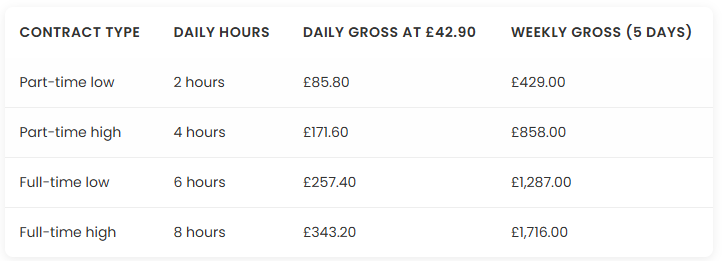
Full-time kitchen helper contracts at 6 hours daily generate £257.40 gross per shift at the £42.90 rate. Stretch that to 8 hours and the daily figure hits £343.20. Multiply by a five-day week and you are looking at £1,286 to £1,716 gross weekly — income that replaces warehouse or retail earnings for career changers without requiring retraining. Overtime pay plus commissions on top of base hours create additional upside during holiday peaks when kitchens run short-staffed.
Part-Time Flexibility: 2-4 Hours Per Day
Part-time kitchen helper jobs at 2-4 hours per day suit students stacking shifts around lectures or parents working school-hour windows. A 3-hour shift at £42.90 pays £128.70 — more than a six-hour shift at the £10.50 minimum many chains still offer. Ten hours weekly at the advertised rate equals £429 gross; twenty hours doubles that to £858. Compare that to Deliveroo averages of £8-12 per active hour after vehicle costs and the part-time kitchen route wins on hourly efficiency even at reduced volume.
Benefits That Change the Take-Home Equation
Base hourly rate tells only part of the story. Advertised packages include overtime pay and commissions, paid vacation with TDS handling, health and life insurance, and various social benefits — a bundle almost never attached to zero-hour hospitality contracts paying £10-12 per hour. Health insurance alone can save £800-1,200 annually versus private cover. Paid vacation at 28 days statutory minimum on full-time hours adds roughly £3,600 in preserved income you would forfeit on casual contracts.
Comparing Top UK Employers for Kitchen Helper Jobs
Employer choice determines whether kitchen helper job opportunities come with structured training, guaranteed hours, and genuine benefit delivery — or thin promises on a recruitment banner. Large UK operators run centralised hiring with documented onboarding; independent sites vary wildly. Below is a practical comparison of major employers actively recruiting kitchen support staff across contract catering, pub dining, and quick-service formats.
Contract Catering: Compass Group UK and Sodexo UK
Compass Group UK operates staff restaurants, hospital kitchens, and corporate dining contracts nationwide. Kitchen helper roles on Compass sites typically follow fixed shift patterns with uniform standards and equipment budgets that reduce out-of-pocket gear costs. Sodexo UK runs a parallel contract-catering portfolio across education, healthcare, and business parks. Both groups hire at volume during September and January intake cycles — timing applications around those windows improves response rates measurably.
Pub and Restaurant Chains: JD Wetherspoon, Greene King, and Mitchells & Butlers
JD Wetherspoon kitchens run high-volume prep with standardised menus, making kitchen helper jobs predictable once you learn the cycle. Greene King and Mitchells & Butlers operate branded pub estates where helpers split time between prep, kitchen cleaning, and dish pit coordination. Pub-chain rates vary by site — always confirm whether the £42.90 figure applies to your specific location or represents a premium tier within a broader pay band.
Hotel and Quick-Service Operators: Whitbread, Nando's UK, and Wagamama
Whitbread Premier Inn kitchens need breakfast-prep helpers on early shifts starting near 5 a.m. — brutal for night owls, ideal for early risers who want afternoons free. Nando's UK and Wagamama run fast-casual models where kitchen helper jobs emphasise grill support, sauce prep, and strict allergen separation. Quick-service chains promote faster than pub kitchens; a reliable six-month helper track record often opens commis conversations.
Recruitment Channels: Caterer.com and Blue Arrow Hospitality
Caterer.com aggregates hospitality vacancies across employer types and filters by role, location, and contract length — useful when you want to compare five offers side by side before committing. Blue Arrow Hospitality supplies temporary and permanent kitchen staff to venues that need rapid cover. Registering with both platforms doubles your visible pipeline without duplicate applications to the same hiring manager.
- Identify whether the £42.90 rate applies to your contract type and location before investing application time
- Compare guaranteed hours against zero-hour alternatives — hourly rate means nothing without shift certainty
- Verify benefit start dates: some employers activate health insurance after probation, others from day one
- Prioritise employers with structured kitchen training rather than sink-or-swim onboarding
How to Apply for Kitchen Helper Roles: Step-by-Step from First Search to First Shift
Application friction kills more kitchen helper candidates than qualification gaps. The process is straightforward once you assemble documentation, complete basic food-safety certification, and target employers with active vacancies rather than speculative CV drops.
Step 1: Confirm Eligibility and Gather Documentation
Every UK kitchen employer verifies right-to-work status before scheduling interviews. Gather your passport or biometric residence permit, National Insurance number, and proof of address. Non-UK applicants should clarify visa conditions — some sponsored routes restrict weekly hours, which conflicts with full-time 6-8 hour contracts. A DBS Check application service streamlines background clearance required for roles in schools, care homes, and hospital kitchens.
Step 2: Complete Food Safety Certification
Most kitchen helper jobs require CIEH Food Safety Level 2 Certification or an equivalent accredited course covering hygiene, temperature control, and contamination prevention. Online completion takes one day and costs £15-30 — negligible against weekly earnings at the advertised rate. Springboard hospitality career support programmes sometimes fund certification for unemployed applicants transitioning into food service.
Step 3: Prepare Essential Kit Before Day One
Employers provide some uniform items, but arriving prepared signals professionalism. Standard starter kit includes non-slip footwear such as Shoes For Crews, chef whites from Dickies, a Nisbets Professional Kitchen Apron, and a personal Victorinox Chef Knife for prep work. Commercial kitchens also use heavy-duty equipment like Russell Hobbs Commercial Blenders for sauces and soups — familiarity with safe operation speeds onboarding.
| Item or Service | Purpose for Kitchen Helpers |
|---|---|
| CIEH Food Safety Level 2 Certification | Mandatory hygiene credential for most UK commercial kitchen hiring |
| Caterer.com job matching service | Centralised search across contract, pub, and quick-service vacancies |
| Springboard hospitality career support | Training grants and mentorship for career changers entering food service |
| DBS Check application service | Background clearance for roles in regulated environments |
| Hospitality Action wellbeing support | Counselling and financial assistance for hospitality workers under stress |
Step 4: Submit Applications and Track Response Timelines
Apply directly on employer career portals for Compass Group UK, Sodexo UK, and chain operators, then mirror listings on Caterer.com to catch reposted vacancies. Typical hiring timelines run two to four weeks from application to start date: one week for CV screening, one week for interview and trial shift, one to two weeks for references and DBS clearance. Trial shifts are standard — treat them as paid auditions where punctuality and kitchen cleaning thoroughness matter more than conversation skills.
Step 5: Evaluate Offers Using a Total-Compensation Checklist
When an offer arrives, calculate total compensation rather than fixating on hourly rate alone. Add overtime eligibility, commission structures, paid vacation days, health and life insurance value, and various social benefits against any probation-period restrictions. Ask directly: do benefits activate on day one or after 90 days? Are full-time hours guaranteed or can they drop to part-time 2-4 hour windows without consent? A £42.90 rate on a zero-hour contract loses to a £14 guaranteed-hours contract every time — but a £42.90 rate on guaranteed full-time hours with insurance attached is a fundamentally different financial proposition.
Step 6: Plan Progression Beyond the Helper Role
Kitchen helper job opportunities and roles are designed as entry ramps, not dead ends. Six to twelve months of reliable prep, kitchen cleaning, and operational assistance builds the station awareness needed for commis chef promotion. Track your weekly hours, document skills acquired, and request formal progression conversations at the six-month mark. Operators like Nando's UK and Wagamama publish internal training pathways; contract caterers like Sodexo UK rotate staff across sites to broaden experience. The £42.90 entry wage buys you time to stack credentials — food safety level 3, knife skills courses, allergen management — that compound into £28,000-35,000 sous-chef trajectories within three to five years.
Whether you need part-time flexibility around study schedules or full-time income replacement after leaving retail or warehouse work, kitchen helper roles with structured pay and genuine benefits represent one of the few hospitality entry points where the numbers actually work. Verify every figure against your specific offer letter, model your weekly gross before tax, and choose employers with documented training rather than vague promises — the difference between £11 and £42.90 per hour is not luck, it is contract selection done with arithmetic.