HVAC Repair & AC Cleaning Guide 2026: Costs, Maintenance & Tips
HVAC breakdowns always come at the worst time. Whether your AC stops blowing cold air in July or the furnace gives out during a winter freeze, knowing what to expect can save you hundreds — even thousands — of dollars. This 2026 guide covers HVAC repair costs, AC cleaning and maintenance prices, emergency service fees, the best HVAC companies, and when it makes more sense to replace than repair. All data is based on current US market rates.
HVAC Repair Costs in 2026: What US Homeowners Should Expect
Americans spend $14 billion every year on HVAC repairs and services combined. That number makes more sense when you look at the typical price tags. Most homeowners pay between $150 and $1,200 for a single repair visit. Minor fixes like replacing a thermostat sensor run under $200. Major component failures — a dead compressor or a cracked heat exchanger — can push past $1,500.
Average repair costs in 2026 sit around $450 to $650 per service call. That's actually down about 26% from the 2023 peak, even though parts and labor have gotten more expensive. The reason? Better diagnostic tools and more standardized pricing across the industry.
Repair Costs by Component
Knowing which part failed helps you spot a fair quote. Here's what common repairs cost in 2026: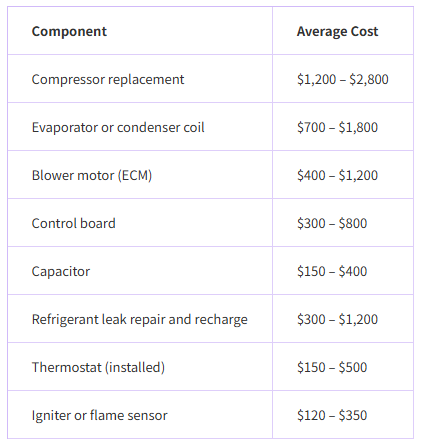
Repair Costs by AC Unit Type
The kind of system you own also changes the price range: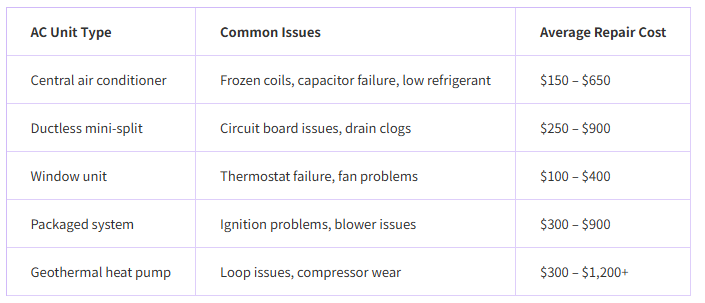
What Makes Up the Bill
Most HVAC companies charge a diagnostic fee of $75 to $150 just to show up and figure out what's wrong. That fee usually gets credited toward the repair if you move forward. Labor runs $75 to $150 per hour. If you live in high-cost areas like New York or New Jersey, expect to pay 15% to 30% above national averages.
Emergency HVAC Repair: Costs and What to Expect
Heating and cooling systems rarely break on a Tuesday morning. Emergency calls — nights, weekends, and holidays — come with significant surcharges. Expect to pay $100 to $300 extra on top of the normal repair costs, or $40 to $80 more per hour for labor. Total emergency repair bills typically land between $250 and $1,500+ depending on the problem.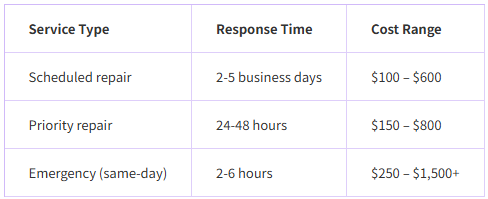
The most common emergency calls in 2026 include: AC not cooling at all, complete furnace failure in winter, refrigerant leaks, compressor burnout, and electrical issues that trip breakers. If you face any of these, call a licensed technician right away — waiting usually makes the damage worse and the repair more expensive.
AC Cleaning & Preventive Maintenance: Cost vs. Savings
Here's the part most homeowners skip: regular AC cleaning and maintenance. A professional tune-up costs $75 to $350 per year, and it pays for itself many times over. Systems that get annual maintenance last 15 to 20 years — neglected ones can fail a decade early.
Professional AC Cleaning Costs
AC cleaning is more than just swapping a filter. Here's what professional services cost in 2026: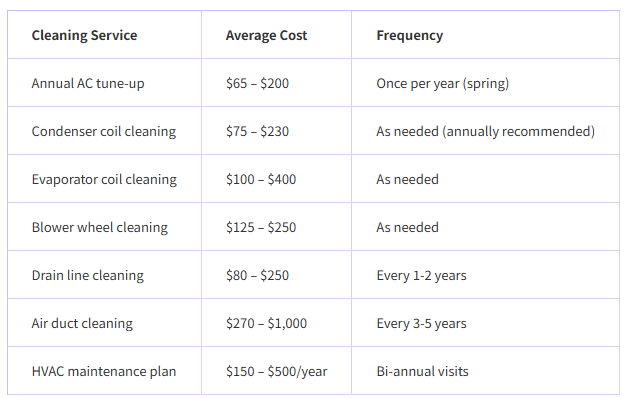
DIY Maintenance That Makes a Difference
You don't need a technician for everything. These steps take ten minutes and keep your system running efficiently:
- Change air filters every 1-3 months. A dirty filter is the #1 cause of reduced airflow. Mark it on your calendar.
- Keep a 2-foot clearance around the outdoor unit. Trim bushes, clear leaves, and rinse the condenser coils with a garden hose once in spring.
- Check and clear the condensate drain line. Clogged drains cause water damage and mold. Pour a cup of vinegar through it every few months.
- Test your thermostat seasonally. Switch to cooling mode in spring and heating mode in fall before you actually need it.
- Don't block indoor vents. Furniture, curtains, and rugs over registers force your system to work harder.
Note: Dirty evaporator and condenser coils reduce AC efficiency by up to 30%. Without yearly maintenance, your system loses roughly 5% efficiency each year. Over five years, that's a quarter of your cooling capacity gone — and your energy bill goes up to match.
HVAC Repair vs. Replacement: Making the Smart Choice
So when should you fix it, and when should you replace the whole thing? Here's the framework that helps most homeowners decide.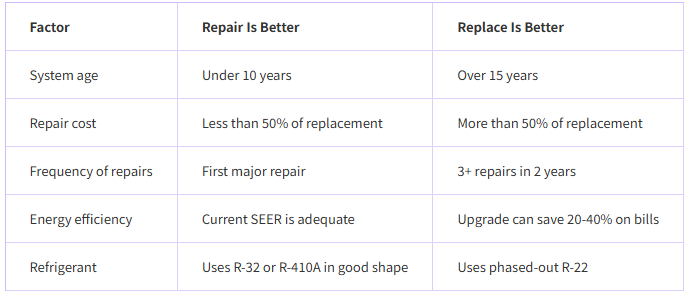
Full system replacement in 2026 runs $5,000 to $12,000+ for standard-efficiency units and $9,000 to $16,500 for high-efficiency models with SEER2 ratings above 18. That's a big number, but the R-410A phaseout that took full effect in 2025 is pushing some older systems toward replacement faster than planned. Refrigerant prices are climbing, making repairs on older R-410A units more expensive.
There's good news on the replacement side. Heat pumps outsold gas furnaces by 32% in 2024 — over 4.1 million units shipped. Nearly 48% of US households now use electric heating. Federal tax credits and state-level rebates can knock thousands off the price of a qualifying high-efficiency heat pump system.
Best HVAC Repair Companies in the US 2026
Not all HVAC companies deliver the same level of service. Here's a look at the top national and regional providers based on customer reviews, certifications, and emergency availability.
- ARS / Rescue Rooter: One of the largest HVAC service networks in the US with an A+ BBB rating. ARS offers 24/7 emergency service across most states. Their standout feature is a one-year labor warranty on new installations — if something isn't right, they'll fix it or give a full refund. They also work with multiple equipment brands, so you're not locked into one manufacturer.
- Michael & Son: A Carrier-certified installer with 500+ trucks on the road and round-the-clock availability. Their membership program gets you priority scheduling and guaranteed same-day service. Every customer gets at least 10% off any service over $50, plus flexible financing options on larger jobs.
- Service Experts: Every Service Experts technician holds an Advanced Certified Expert (ACE) certification, one of the highest credentials in the HVAC industry. They offer three membership tiers — Priority+, Maintenance, and Service Experts Advantage — that include free maintenance visits, discounts on equipment, and priority service. They handle everything from furnaces and ACs to geothermal heat pumps and solar systems.
Top HVAC Brands Compared
If you're shopping for a new system, these brands consistently rank highest for reliability and efficiency:
- Carrier: The premium choice. Over 100 years in business. Top-tier build quality but higher upfront cost. Strong warranty coverage.
- Trane: Known for extreme durability. Every unit tested in extreme climates. 10-year limited warranty standard. Premium pricing.
- Lennox: Focus on energy efficiency. Some of the highest SEER ratings available. Advanced smart-home integration.
- Goodman: The best-selling residential brand by volume. Lowest price point among major brands. Reliable since Daikin acquisition in 2012.
- Rheem: Comprehensive EcoNet smart system with proactive diagnostics. Strong value for price. Great integration with their water heater lineup.
Your 2026 HVAC Action Plan
Here's a simple plan to keep your system running and your costs predictable:
- This month: Check your air filter. If you can't remember the last time you changed it, it's time.
- Spring (March-May): Schedule a professional AC tune-up before the summer rush. Clean the outdoor unit. Test the thermostat in cooling mode.
- Summer (June-August): Change filters monthly if you run AC constantly. Keep debris clear from the outdoor unit. Listen for unusual noises.
- Fall (September-November): Schedule a furnace or heat pump tune-up. Test the thermostat in heating mode. Seal any drafty windows or doors.
- Winter (December-February): Keep filters on schedule. If your system struggles to keep up, have a technician check ductwork and insulation before next season.
The bottom line: a little maintenance goes a long way. The $75 to $350 you spend on annual AC cleaning and inspection can help you avoid emergency callouts that cost four times as much — and stretch your system's life well past the 15-year mark.